


Are employees now liable for damages they cause while working?
The new Book VI of the Civil Code has significantly revised the rules around extra-contractual liability. In this article, we discuss how this reform affects the liability of employees towards their employer's contracting parties, such as customers, suppliers, and others. The new rules take effect from 1 January 2025.
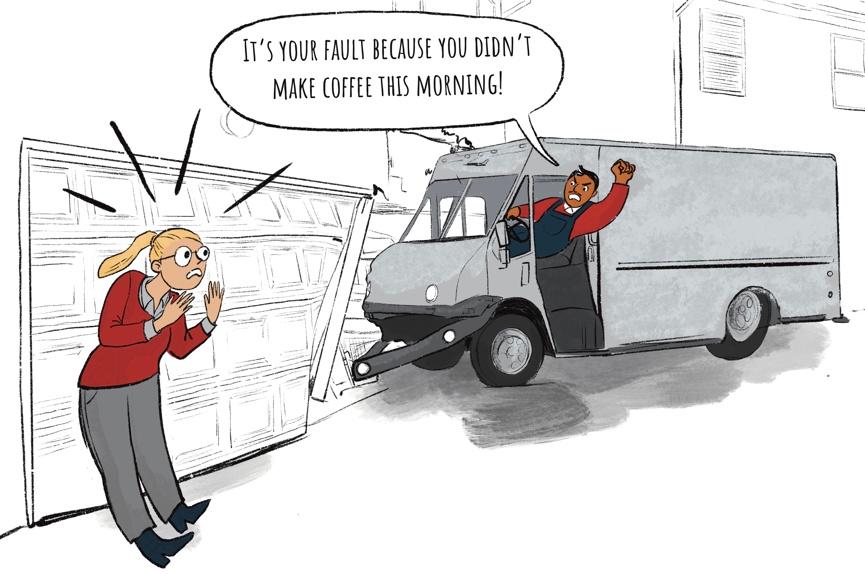
The abolition of quasi-immunity of the executive agent (Part 3)
1. Abolition of the quasi-immunity of the performing agent/assistant person
Previously, it was assumed that performing agents or auxiliary persons, such as employees, were protected from liability. This meant that an employee could not be held liable by a third party, such as a customer or business partner of the employer, for damages caused in the course of their work.
However, with the introduction of the new Civil Code, this protection has been removed. Employees can now be held directly liable by a third party, even if they themselves do not have a contract with that party.
Directors of companies, representatives, subcontractors, and employees can also qualify as auxiliary persons under the new regime, meaning that they too can now be held directly liable by an injured party.
2. The impact of Book VI on employment relations versus the Employment Contracts Law
2.1 The employee is directly liable
Under Book VI of the new Civil Code, customers and other contracting parties of the employer can now claim damages directly from the employee if they believe that the employee made a mistake in the performance of a contract they entered into with the employer. The rules specify that extra-contractual liability applies between the injured party and their co-contractor’s assistant. However, this only applies if the contract or the law does not provide otherwise, which allows for derogations.
The Employment Contracts Law limits the employee’s liability both contractually and extra-contractually but does not prevent a third party from holding an employee liable. This means that a customer or other contracting party of the employer can hold the employee directly liable for damages caused in the performance of the contract with the employer.
2.2 It is possible to contractually protect employees from claims
From now on, employers have the option of including a clause in their contracts with customers or other contracting parties that excludes direct claims against their employees. This can serve as a way to protect employees from third-party liability claims.
In the event of an extra-contractual claim by a third party, an employee can also defend themselves using defenses arising from the contract between their employer and the third party, such as agreed contractual deviations.
Furthermore, such defenses can also stem from the employee’s own employment contract with the employer.
2.3 The Employment Contracts Law provides quasi-standing
Article 18 of the Employment Contracts Law still provides employees with a limitation of their liability, which they can also invoke against a third party. This provision remains applicable and continues to offer workers some protection from full liability even under the new rules.
If an employee causes damage to the employer or third parties during the performance of their employment contract, their civil liability is limited by Article 18 of the Employment Contracts Law. As a result, an employee is only liable for damages caused by fraud, grave misconduct, or slight misconduct that occurs frequently. Fraud includes actions such as theft, while grave misconduct refers to behavior that is inexcusable. Frequent slight misconduct refers to recurring minor mistakes.
Additionally, the employer remains liable for damages caused by their employee to customers or other contracting parties, as before. The new Civil Code regulates the liability of the appointing party (in this case, the employer). It reaffirms the principle of the old Civil Code, providing that the appointing party is liable for damages caused by their employees to third parties during the performance of their duties, whether due to errors or other liability events. The employer, as the appointing party, is considered responsible for supervising the employee’s conduct.
As a result, the elimination of quasi-immunity for the performing agent is likely to have little practical impact on employees.
3. Conclusion
Although employees may, in the future, be held directly liable by the client or any other contracting party of the employer, they can still invoke the liability limitation under Article 18 of the Employment Contracts Law.
Additionally, the employer remains liable for all errors made by employees, including minor errors, that cause damage to third parties. Employers can also include provisions in their agreements with customers, suppliers, and other contractors stating that their employees will not be held liable during the performance of their contracts.
However, it is unlikely that an injured party will sue an employee directly for damages, given that employers often have greater financial resources and broader liability. Consequently, the elimination of the quasi-immunity of the performing agent is expected to have minimal practical impact on employees.
If you would like more information or assistance on this matter, please do not hesitate to contact our specialists at info@be.Andersen.com or +32 (0)2 747 40 07.
Discover more about this topic?
I am looking for a specialist in


See more articles

05.10.2026
•NEWS FROM THE FIRM
Luc Herve joins Andersen as the firm opens a new office in Liège
We are pleased to announce that Luc Herve's law firm has joined Andersen in Belgium, which opened a new office in Liège in September. Luc Herve joins Andersen as a Partner, bringing more than thirty years of experience in tax law, alongside his academic work and role as an accredited mediator. He is joined by Jérémy Lerusse, Associate. Both are members of the Liège Bar.

01.10.2026
•Real Estate, Renting and Co-ownership, Andersen in Belgium
New Code of Ethics for Real Estate Agents: More Than a Mere Update
On 21 September 2026, the Royal Decree of 20 July 2026 approving the new Code of Ethics of the Professional Institute of Real Estate Agents (BIV) was published in the Belgian Official Gazette. The new Code enters into force on 1 October 2026, the date on which the 2018 regulations are repealed.

29.09.2026
•Urban Planning and Environmental Law, Andersen in Belgium
Financially contributing to a spatial implementation plan (RUP) poses a risk to your permit
A developer who contributes financially to the drafting of a spatial implementation plan may thereby jeopardize their integrated environmental permit. This follows a ruling by the Council for Permit Disputes dated September 17, 2026. The ruling addresses a practice that is widespread throughout Flanders.

17.09.2026
•Urban Planning and Environmental Law, Andersen in Belgium
Health organisations to become part of the public concerned in urban and environmental permitting procedures
Non-governmental organisations dedicated to protecting human health will soon be able, like environmental protection organisations, to qualify as part of the “public concerned” in urban and/or environmental permitting procedures. This will broaden the range of organisations that may challenge a permitting decision, adding a new dimension to future permitting procedures.