


Company directors and dismemberment of property: the right reflexes to acquire.
Company directors often use dismemberment of property to promote the acquisition of real estate intended either to house their company's offices, or to finance the purchase of a building intended to be made available to them as a benefit of any kind. These mechanisms are perfectly legal, although not much appreciated by the tax authorities, who control them very regularly, if not systematically.
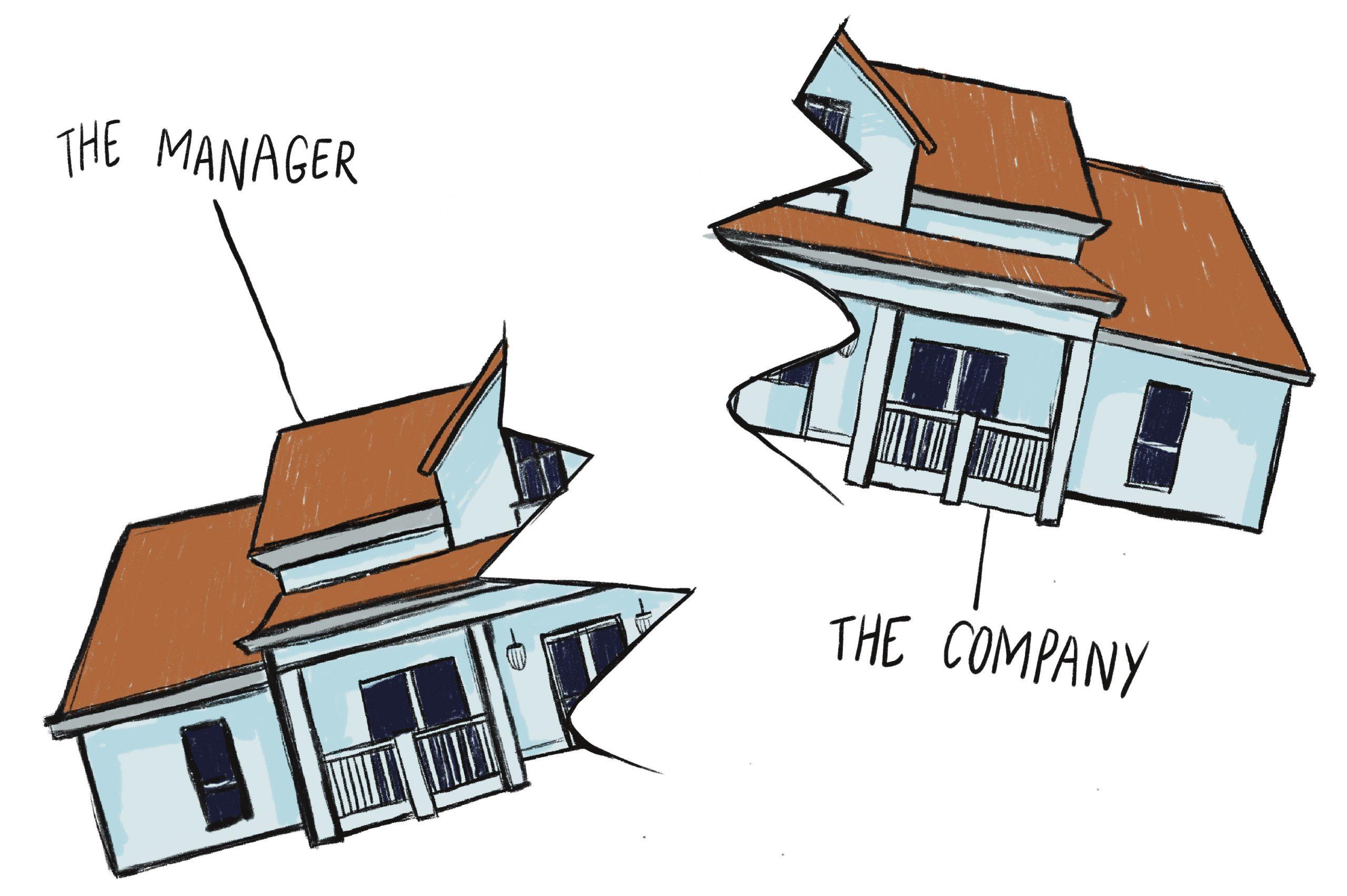
The reflexes to acquire to secure the perimeter when such an structure is envisaged, carried out, in progress or about to be completed are as follows:
- 1. It is absolutely imperative at every stage of the process to demonstrate that the company director and the company have each paid a fair price for the rights they are acquiring.
In most cases, the company acquires the usufruct of a property, which it uses for its own needs or makes available, in whole or in part, to its director as a benefit of any kind. The company director acquires bare ownership of the same property.
At the time of the acquisition, therefore, it is necessary to be able to demonstrate that the director on the one hand, and the company on the other, have paid the fair economic value of the rights they are acquiring respectively.
The tax authorities frequently try to prove that the company has paid too much to acquire the usufruct, and the difference between what it has paid and what it should have paid in the eyes of the authorities is qualified by the latter as a benefit in kind, with the director being taxed at the personal income tax rate on the difference, possibly accompanied by increased taxes and penalties. - 2. It is also important to contractually provide for the attribution of a benefit of any kind resulting from the provision of all parts of the real estate to the manager.
To do this, the company’s articles of association must expressly provide for the director’s mandate to be remunerated, and a management agreement must be signed between the director and the company, expressly providing for all or part of the property to be made available,as a benefit in kind. - 3. The company claiming the deduction of expenses relating to the property made available must be able to demonstrate the reality of the services provided by its company director. This is very important, as the tax authorities often refuse to allow the company to deduct as a business expense all expenses and depreciation relating to the part of the property made available as a benefit in kind.
Case law is often unfavorable to taxpayers who are unable to demonstrate the day-to-day reality of their services. In practice, this can only be done by producing precise, detailed monthly statements of services, appended to the company director ‘s invoice. - 4. Finally, when such a dismemberment of ownership is about to come to an end, it is advisable to examine extremely carefully, in detail and with documentation, any compensation to be paid by the company in return for the economic value of the work that the company has carried out on the property during the period of dismemberment.
Provided these precautions are taken, ownership dismemberment should, in principle, pass administrative and tax audits without a hitch.
If you have any questions about this or if you would like assistance, you can always contact our tax specialists at Andersen in Belgium at +32 2 747 40 07 or info@be.Andersen.com.
Discover more about this topic?
I am looking for a specialist in










See more articles

05.10.2026
•NEWS FROM THE FIRM
Luc Herve joins Andersen as the firm opens a new office in Liège
We are pleased to announce that Luc Herve's law firm has joined Andersen in Belgium, which opened a new office in Liège in September. Luc Herve joins Andersen as a Partner, bringing more than thirty years of experience in tax law, alongside his academic work and role as an accredited mediator. He is joined by Jérémy Lerusse, Associate. Both are members of the Liège Bar.

01.10.2026
•Real Estate, Renting and Co-ownership, Andersen in Belgium
New Code of Ethics for Real Estate Agents: More Than a Mere Update
On 21 September 2026, the Royal Decree of 20 July 2026 approving the new Code of Ethics of the Professional Institute of Real Estate Agents (BIV) was published in the Belgian Official Gazette. The new Code enters into force on 1 October 2026, the date on which the 2018 regulations are repealed.

29.09.2026
•Urban Planning and Environmental Law, Andersen in Belgium
Financially contributing to a spatial implementation plan (RUP) poses a risk to your permit
A developer who contributes financially to the drafting of a spatial implementation plan may thereby jeopardize their integrated environmental permit. This follows a ruling by the Council for Permit Disputes dated September 17, 2026. The ruling addresses a practice that is widespread throughout Flanders.

17.09.2026
•Urban Planning and Environmental Law, Andersen in Belgium
Health organisations to become part of the public concerned in urban and environmental permitting procedures
Non-governmental organisations dedicated to protecting human health will soon be able, like environmental protection organisations, to qualify as part of the “public concerned” in urban and/or environmental permitting procedures. This will broaden the range of organisations that may challenge a permitting decision, adding a new dimension to future permitting procedures.