


Andersen welcomes a new partner in EU Regulatory, Competition Law and Public Affairs
We are pleased to announce that Miguel Ángel Caramello-Álvarez has joined our firm as a Partner in EU regulatory, competition law, and public affairs.
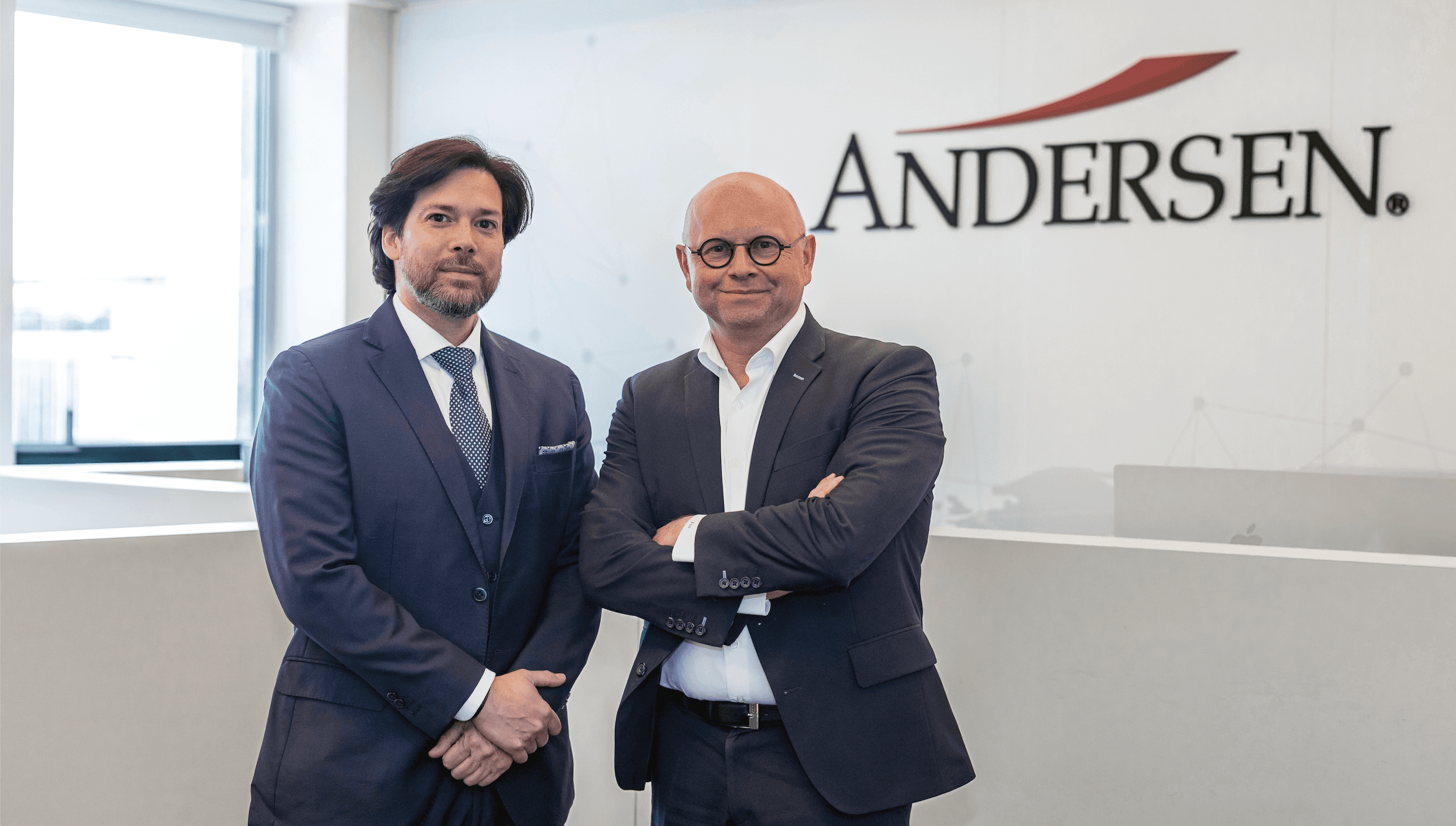
Miguel is a seasoned lawyer with over 15 years of experience in the fields of Competition Law, State aid, European and international Rail Transport Law, as well as EU Public Policy. He advises a diverse client base, international companies, professional associations, and public entities, facing complex legal and regulatory challenges in a constantly evolving European context.
His practice includes as well foreign direct investment, foreign subsidies, public procurement, market access and regulatory compliance strategies. Miguel regularly represents his clients before the European Commission as well as before both national and international regulatory authorities.
Before joining Andersen, Miguel held senior positions in leading international law firms and professional associations in Brussels. He notably served as Chief Legal Officer of the Community of European Railways and Infrastructure Companies (CER), where he led major legal and regulatory initiatives across the European rail sector.
In parallel, Miguel shares his expertise as a visiting lecturer at the European College of Parma, where he teaches EU Transport Policy to postgraduate students.
Admitted to the Bar in Pamplona (Spain) and registered with the Brussels Bar (E-list), Miguel combines in-depth knowledge of national and EU legal frameworks with a strategic vision of institutional and policy-related issues.
Miguel’s arrival is a major asset for our firm. His cross-disciplinary expertise, dedication, and ability to anticipate legal and policy challenges further strengthen the services we offer and the strategic support we provide to our European and international clients.
We look forward to continuing the development of our firm alongside Miguel and thank our clients for their continued trust.
Discover more about this topic?
I am looking for a specialist in

See more articles

01.10.2026
•Real Estate, Renting and Co-ownership, Andersen in Belgium
New Code of Ethics for Real Estate Agents: More Than a Mere Update
On 21 September 2026, the Royal Decree of 20 July 2026 approving the new Code of Ethics of the Professional Institute of Real Estate Agents (BIV) was published in the Belgian Official Gazette. The new Code enters into force on 1 October 2026, the date on which the 2018 regulations are repealed.

29.09.2026
•Urban Planning and Environmental Law, Andersen in Belgium
Financially contributing to a spatial implementation plan (RUP) poses a risk to your permit
A developer who contributes financially to the drafting of a spatial implementation plan may thereby jeopardize their integrated environmental permit. This follows a ruling by the Council for Permit Disputes dated September 17, 2026. The ruling addresses a practice that is widespread throughout Flanders.

17.09.2026
•Urban Planning and Environmental Law, Andersen in Belgium
Health organisations to become part of the public concerned in urban and environmental permitting procedures
Non-governmental organisations dedicated to protecting human health will soon be able, like environmental protection organisations, to qualify as part of the “public concerned” in urban and/or environmental permitting procedures. This will broaden the range of organisations that may challenge a permitting decision, adding a new dimension to future permitting procedures.

08.09.2026
•Real Estate, Renting and Co-ownership, Andersen in Belgium
Flanders Cracks Down on Substandard Housing with Significantly Higher Fines
Are you renting out a home with serious quality defects? If so, you risk criminal prosecution. Starting today, penalties for renting substandard housing in Flanders will be significantly increased. A fine can reach up to 800,000 euros under aggravating circumstances. At the same time, judges will have greater discretion to tailor the penalty to the severity of the offense.