


Rezoning areas as water-sensitive open space areas
From 18 September 2024, the property broker's duty of disclosure has been extended. The real estate agent must also inform buyers whether or not the property is located in a water-sensitive open space area. This is in addition to the real estate agent's duty to inform about the availability of the environmental permit, the most recent urban planning destination, any remedial measures, subdivision permit, etc. Not only when selling a property but also when renting out a property for more than nine years, the fact whether or not the property is located in water-sensitive open space area must be disclosed.

How does this affect property agents and owners?
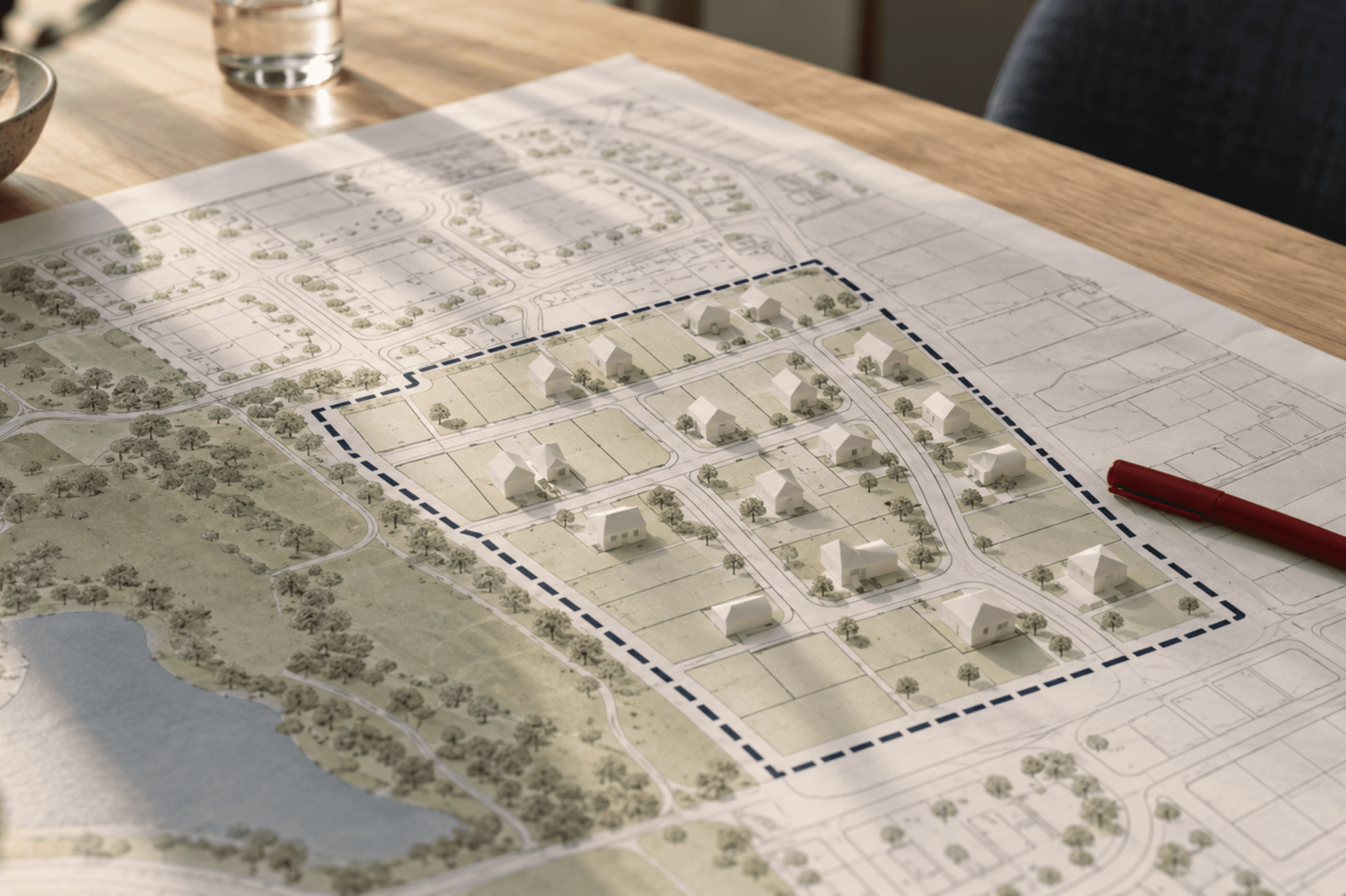
This obligation arises from the decisions of the Flemish Government of 19 July 2024 on the definitive designation of water-sensitive open space areas. Water-sensitive open space areas are undeveloped water-sensitive areas with a hard designation. The Flemish Government decided that it would be better not to develop and reallocate these areas.
By doing so, the Flemish Government wants to prevent construction in several selected flood-sensitive areas.
What are the consequences of this decision?
- Within water-sensitive open space areas, water management, nature conservation, forestry, landscape care, agriculture, and recreation are possible functions. Small-scale infrastructure for recreation or in function of open space functions also remains possible. However, the possibilities for construction and paving are severely restricted.
- Undeveloped parts of subdivisions that lie within a water-sensitive open space area will lapse due to designation as a water-sensitive open space area and can therefore no longer be built on.
- Existing constructions within a water-sensitive open space area can be retained, but these are subject to the zonal basic rights of the Flemish Zoning Code. This Code provides a number of basic rights for such zoned structures, being conditions and (volume) limitations within which zoned structures may be converted, rebuilt, or extended or their function may change. These rules are different from ‘zone-own’ structures.
- There are no restrictions on agricultural use within water-sensitive open space areas.
- Plots located in these designated water-sensitive open space areas suffer economic depreciation as a result, as the opportunity for development disappears.
Because of these significant changes, all owners of plots within these areas will be informed by letter of the public enquiry about the provisional designation, and later also about the final designation by the Flemish government.
From 18 September 2024, owners of affected areas are eligible for planning compensation. Owners have two years to apply for this compensation. Consequently, it concerns compensation for the depreciation of the value of land that can no longer be developed as before the designation as water-sensitive open space areas.
When selling such land, the real estate agent should therefore also inform the potential buyers about the inclusion of the land as water-sensitive open space area.
If you would like more information on this subject, please do not hesitate to contact our specialists at info@be.Andersen.com or +32 (0)2 747 40 07.
Discover more about this topic?
I am looking for a specialist in





See more articles

01.10.2026
•Real Estate, Renting and Co-ownership, Andersen in Belgium
New Code of Ethics for Real Estate Agents: More Than a Mere Update
On 21 September 2026, the Royal Decree of 20 July 2026 approving the new Code of Ethics of the Professional Institute of Real Estate Agents (BIV) was published in the Belgian Official Gazette. The new Code enters into force on 1 October 2026, the date on which the 2018 regulations are repealed.
29.09.2026
•Urban Planning and Environmental Law, Andersen in Belgium
Financially contributing to a spatial implementation plan (RUP) poses a risk to your permit
A developer who contributes financially to the drafting of a spatial implementation plan may thereby jeopardize their integrated environmental permit. This follows a ruling by the Council for Permit Disputes dated September 17, 2026. The ruling addresses a practice that is widespread throughout Flanders.

17.09.2026
•Urban Planning and Environmental Law, Andersen in Belgium
Health organisations to become part of the public concerned in urban and environmental permitting procedures
Non-governmental organisations dedicated to protecting human health will soon be able, like environmental protection organisations, to qualify as part of the “public concerned” in urban and/or environmental permitting procedures. This will broaden the range of organisations that may challenge a permitting decision, adding a new dimension to future permitting procedures.

08.09.2026
•Real Estate, Renting and Co-ownership, Andersen in Belgium
Flanders Cracks Down on Substandard Housing with Significantly Higher Fines
Are you renting out a home with serious quality defects? If so, you risk criminal prosecution. Starting today, penalties for renting substandard housing in Flanders will be significantly increased. A fine can reach up to 800,000 euros under aggravating circumstances. At the same time, judges will have greater discretion to tailor the penalty to the severity of the offense.