


Soil Decree Updated: Pragmatism Gains Ground
On 23 March 2026, several amendments to the Soil Decree enter into force. Although these adjustments may at first glance appear largely technical, they clearly address an existing tension within Flemish soil policy: the gap between theoretical standards and their practical applicability. With this reform, the legislator explicitly opts for a more flexible and enforceable framework.

1. Background
The impetus for these amendments lies in concrete implementation issues within the existing soil policy framework. In practice, it has become clear that the guideline values for soil quality, within the context of soil remediation policy, may in some cases be lower than the actual background concentrations present in the soil, notably for substances such as PFAS.
In certain instances, this may result in soil contamination no longer being capable of clear delineation, thereby rendering remediation obligations practically unfeasible. Furthermore, the reuse of soil materials may also be hindered, with significant economic and ecological consequences.
Through the amending decree of 27 February 2026, the legislator seeks to provide a response to these challenges.
2. Increased Flexibility of Soil Quality Guideline Values
A first amendment concerns the determination of soil quality guideline values. The Flemish Government may now explicitly take into account the feasibility of such values. More specifically, where it is not feasible on scientific-technical or socio-economic grounds, guideline values may be established that approach the intended quality level “as far as reasonably achievable.” This reflects the application of the ALARA principle (“as low as reasonably achievable”) within soil policy.
This aims to prevent the imposition of standards that are difficult or even impossible to attain in practice. The preparatory works, however, clarify that this increased flexibility does not constitute a carte blanche. The question arises as to how feasibility is to be assessed. The legislator is clear in this regard: guideline values must continue to be primarily based on the concept of multifunctional soil quality and require enhanced justification. Moreover, new guideline values are inherently evolutionary in nature, implying an obligation on the Flemish Government to keep them updated.
3. Approach in the Absence of Soil Remediation Standards
The amending decree now clarifies how to address contaminating substances for which no specific soil remediation standards exist. In such cases, explicit reference is made to the remediation criterion set out in Article 19 of the Soil Decree. While this principle was already implicitly applicable, it is now expressly enshrined in the decree in order to ensure legal certainty.
4. Further Rules on the Use of Soil Materials
The rules governing the use of soil materials are also further refined. The Flemish Government is granted the authority to establish additional conditions and values, and the decree confirms that the values for unrestricted use are aligned with the soil quality guideline values. In this way, the legislator aims to enhance coherence within soil policy and to support the sustainable and circular use of excavated soil.
5. Strengthening of OVAM’s Role in Data Collection
Finally, OVAM is granted the authority to take soil samples on its own initiative for the purpose of establishing guideline values. This is intended to contribute to a stronger evidentiary basis for policy decisions and to promote a more data-driven approach to soil quality.
Conclusion
In general, it can be concluded that, through this reform, the legislator seeks to strike a balance between environmental protection and practical enforceability. By explicitly embedding the ALARA principle and simultaneously providing additional instruments and clarifications, a framework is created that better aligns with on-the-ground realities. The effectiveness of these amendments will largely depend on their concrete application and justification in practice; nonetheless, they undoubtedly constitute a clear step towards a more flexible and pragmatic soil policy.
Do not hesitate to contact the Real Estate team of Andersen in Belgium for further information and assistance regarding the Soil Decree and its practical application.
Matias Osorio Olivera (Counsel)
Discover more about this topic?
I am looking for a specialist in





See more articles

01.10.2026
•Real Estate, Renting and Co-ownership, Andersen in Belgium
New Code of Ethics for Real Estate Agents: More Than a Mere Update
On 21 September 2026, the Royal Decree of 20 July 2026 approving the new Code of Ethics of the Professional Institute of Real Estate Agents (BIV) was published in the Belgian Official Gazette. The new Code enters into force on 1 October 2026, the date on which the 2018 regulations are repealed.

29.09.2026
•Urban Planning and Environmental Law, Andersen in Belgium
Financially contributing to a spatial implementation plan (RUP) poses a risk to your permit
A developer who contributes financially to the drafting of a spatial implementation plan may thereby jeopardize their integrated environmental permit. This follows a ruling by the Council for Permit Disputes dated September 17, 2026. The ruling addresses a practice that is widespread throughout Flanders.

17.09.2026
•Urban Planning and Environmental Law, Andersen in Belgium
Health organisations to become part of the public concerned in urban and environmental permitting procedures
Non-governmental organisations dedicated to protecting human health will soon be able, like environmental protection organisations, to qualify as part of the “public concerned” in urban and/or environmental permitting procedures. This will broaden the range of organisations that may challenge a permitting decision, adding a new dimension to future permitting procedures.
08.09.2026
•Real Estate, Renting and Co-ownership, Andersen in Belgium
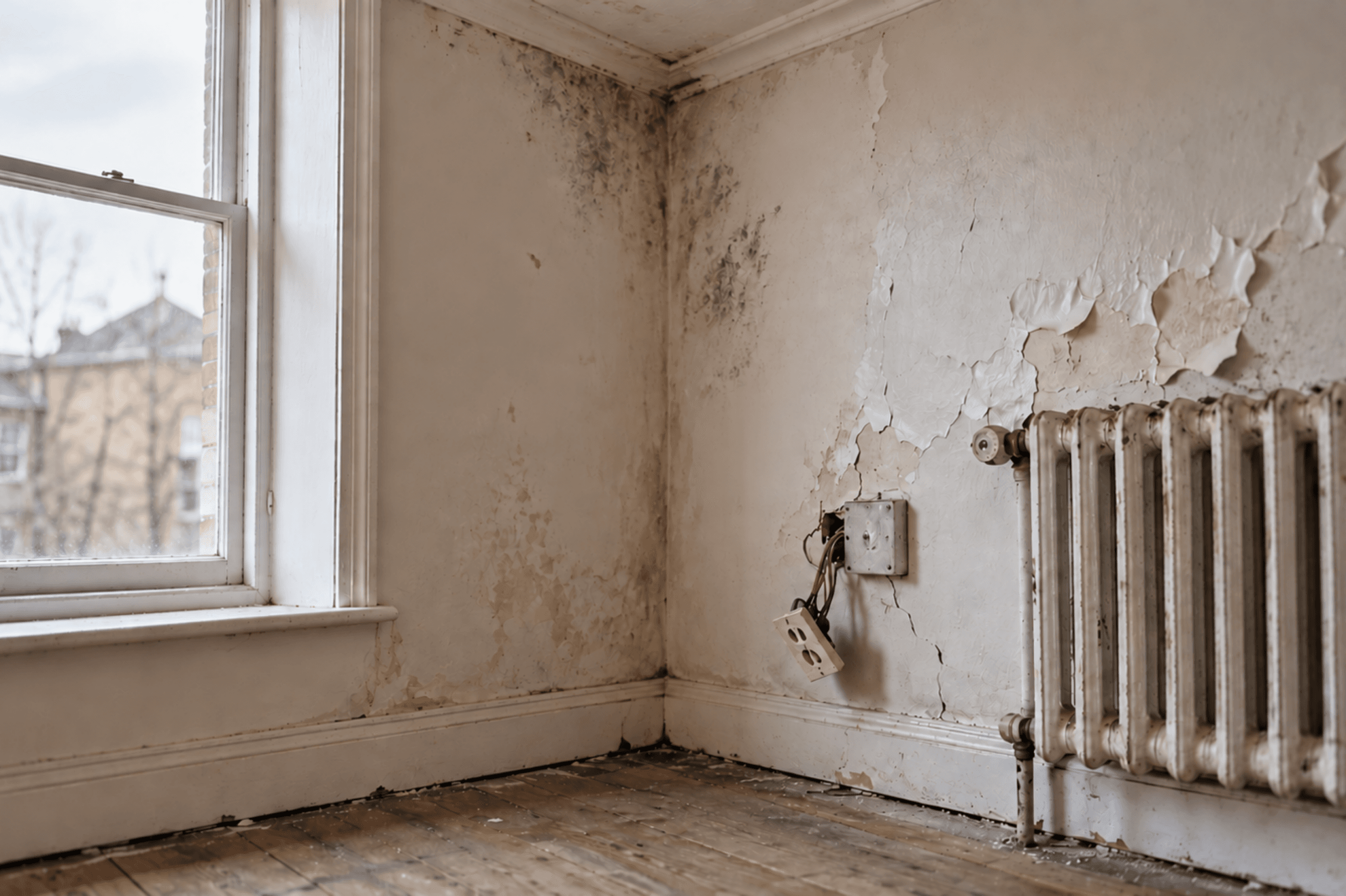
Flanders Cracks Down on Substandard Housing with Significantly Higher Fines
Are you renting out a home with serious quality defects? If so, you risk criminal prosecution. Starting today, penalties for renting substandard housing in Flanders will be significantly increased. A fine can reach up to 800,000 euros under aggravating circumstances. At the same time, judges will have greater discretion to tailor the penalty to the severity of the offense.