


Can a farming lease tenant erect buildings on the land or carry out works?
Flemish Farming Lease Decree explained (Part 10) Some farming lease tenants may wish to undertake repairs, improvements, or conversions on the land they lease, or even erect new buildings. This article examines the implications of such actions.
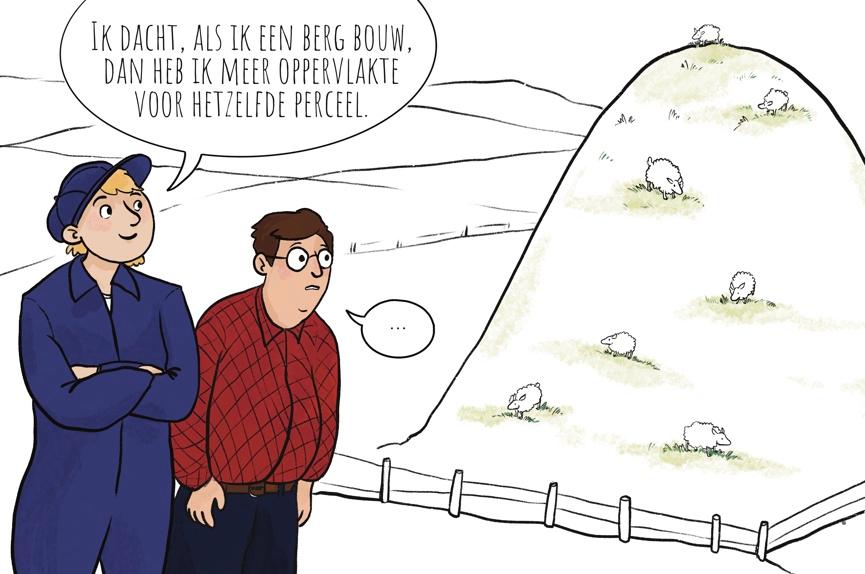
1. Can a farming lease tenant erect buildings or carry out works?
The relevant regulations in this regard are incorporated into the Farming Lease Decree. Under the continued application of Articles 1722 and 1724 of the old Civil Code, tenants have the right, except in cases of valid termination, to:
- Erect any buildings, provided they maintain them and bear all associated costs, and
- Carry out any works—whether new constructions, improvements, repairs, or conversions—useful for the habitability or exploitation of the leased property, consistent with its intended use.
For certain minor infrastructure works, such as drainage or plot elevation, the lessor may impose specific preconditions. The Flemish Government is tasked with drawing up a list of urban planning acts related to minor infrastructure works. These acts are permissible, but only under the conditions set by the lessor.
Moreover, if the lessor’s permission is required, the lessor may also set conditions for the execution of the works. Should the lessor refuse consent or impose preconditions, the lessee may seek authorization from the Justice of the Peace. This is issued following the advice of a competent entity designated by the Flemish Government concerning the preconditions. A description of the proposed works and a cost estimate must be attached to the request.
2. Can the lessee provide security for his claim?
A tenant who has obtained permission or authorization may secure his claim by taking out a mortgage registration in the Patrimony Register at his own expense on the cadastral plots where the buildings and works will be carried out. It is important to note that the tenant’s mortgage takes precedence over existing privileges and mortgages on the plots in question, up to the amount of the increase in value resulting from the works and buildings. This may be of interest to other parties with a privilege or mortgage on a property subject to tenancy.
The cancellation or reduction of the registration may be effected by the mortgage depository through a private deed drawn up in duplicate, accompanied by the slip containing the entry of the registration.
3. What if the property is disposed of or the works are removed or undone?
The lessor is obligated to mention in any deed of alienation of the leased property all works carried out by the lessee, as well as any consent or authorization under which they were performed, possibly after consulting the lessee.
The waiver of the right of clearance or compensation is only possible after the works have been completed and must be established by authentic instrument or by declaration before the court.
Without any obligation from the lessor, the lessee may at any time remove or undo the buildings and works he has erected, provided they can be considered independent objects.
4. What happens when the lease expires?
The Farming Lease Decree also sets forth the rules that the lessee and lessor must follow upon lease expiration.
When the lease expires, the tenant who has borne the costs of the buildings and works is entitled to compensation equal to the increase in the value of the property resulting from these improvements.
If the buildings and works were carried out with the written consent of the lessor, or in the case of usufruct with the written consent of both the bare owner and usufructuary, or with the authorization of the court, the compensation may not be less than the costs incurred by the lessee, provided these costs have not been depreciated. Depreciation is calculated at a flat rate of 4% per year.
If the lease ends at the tenant’s initiative, this compensation may not exceed the total amount the tenant has paid for the lease during the last five years for the property leased from the same lessor.
If the lease ends at the tenant’s initiative solely for important reasons, the tenant is also entitled to this compensation.
In the absence of consent or authorization, the compensation may not exceed the total amount the tenant has paid in rent during the last three years for the property leased from the same lessor.
If you would like more information on this subject, please do not hesitate to contact our specialists at info@be.Andersen.com or +32 (0)2 747 40 07.
Discover more about this topic?
I am looking for a specialist in


See more articles

01.10.2026
•Real Estate, Renting and Co-ownership, Andersen in Belgium
New Code of Ethics for Real Estate Agents: More Than a Mere Update
On 21 September 2026, the Royal Decree of 20 July 2026 approving the new Code of Ethics of the Professional Institute of Real Estate Agents (BIV) was published in the Belgian Official Gazette. The new Code enters into force on 1 October 2026, the date on which the 2018 regulations are repealed.
29.09.2026
•Urban Planning and Environmental Law, Andersen in Belgium
Financially contributing to a spatial implementation plan (RUP) poses a risk to your permit
A developer who contributes financially to the drafting of a spatial implementation plan may thereby jeopardize their integrated environmental permit. This follows a ruling by the Council for Permit Disputes dated September 17, 2026. The ruling addresses a practice that is widespread throughout Flanders.

17.09.2026
•Urban Planning and Environmental Law, Andersen in Belgium
Health organisations to become part of the public concerned in urban and environmental permitting procedures
Non-governmental organisations dedicated to protecting human health will soon be able, like environmental protection organisations, to qualify as part of the “public concerned” in urban and/or environmental permitting procedures. This will broaden the range of organisations that may challenge a permitting decision, adding a new dimension to future permitting procedures.
08.09.2026
•Real Estate, Renting and Co-ownership, Andersen in Belgium
Flanders Cracks Down on Substandard Housing with Significantly Higher Fines
Are you renting out a home with serious quality defects? If so, you risk criminal prosecution. Starting today, penalties for renting substandard housing in Flanders will be significantly increased. A fine can reach up to 800,000 euros under aggravating circumstances. At the same time, judges will have greater discretion to tailor the penalty to the severity of the offense.