


CS3D is finally in sight after many hurdles
The Corporate Sustainability Due Diligence Directive (‘CSDD’, also known as ‘CS3D’), requires sustainable and ethical practices in the value chain and operations of companies within the European Union. On 15 March 2024, after years of negotiations and considerable obstacles, the CS3D was accepted by the majority of the European Council. Although this is about a watered-down version of the original proposal due to resistance from several countries. Not insignificantly, the CS3D has yet to be approved by the European Parliament.
1. What does the CS3D entail?
CS3D describes the steps that companies are obliged to take as part of their due diligence obligations.
Companies covered by it are legally obliged to investigate how their activities and their supply chain affect the environment and human rights. Further, they must be able to demonstrate what actions they will take to achieve a positive impact with their business.
The CS3D applies to manufacturing and supply chain activities worldwide, i.e. both EU and non-EU companies, operating in Europe.
2. Initial obstacles and resistance
On 28 February 2024, it was announced that the European Council did not fully support the new directive, after intensive discussions among member states.
As early as 2023, draft articles on liability of company directors within the supply chain, among others, were removed from the draft directive. This followed objections from Germany, which has already had its own due diligence law without this explicit liability since January 2023. Also in early February 2024, mainly Germany abstained, followed by Italy and France, due to additional financial and administrative burdens on companies.
3. New agreement reached in European Council
On 15 March 2024, member states, after negotiations, reached an agreement on the revised but toned-down version of CS3D. From now on, only companies with more than 1,000 employees, instead of the previous 500, and an annual turnover of more than €450 million, instead of the former €150 million, will have to comply with the reporting requirements.
The effect of these changes is that within Europe, only 5,500 companies will be subject to the reporting requirement in the first phase, instead of 50,000 companies as previously stipulated. This is a reduction of up to 70% compared to the original approved text. In Belgium, this amounts to 200 companies.
4. What are the implications for companies outside the scope of CS3D?
At first sight, it seems as if the amended regulation mainly affects large companies, with no direct impact on smaller companies.
Beware, however, as this view is misleading.
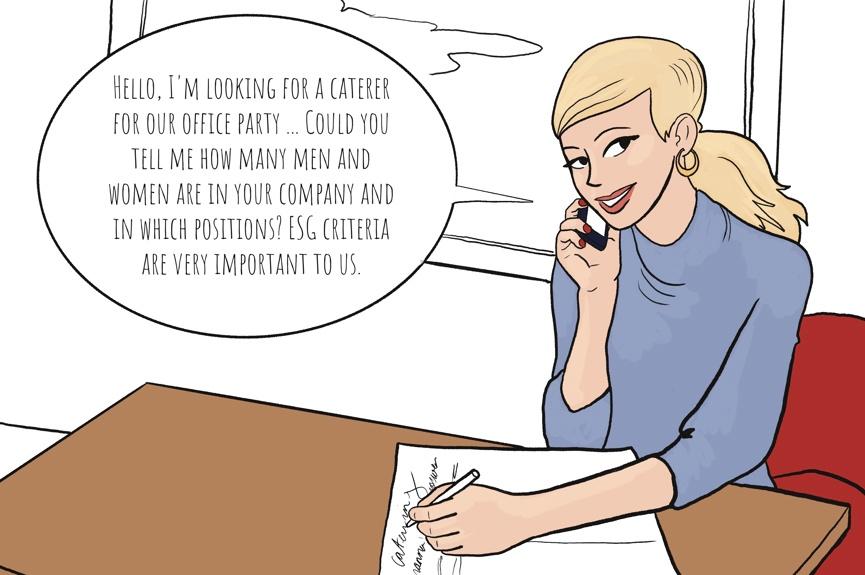
Companies covered by CS3D are required to report transparently on their supply chain. Consequently, they will turn to their suppliers who in turn will have to prove that their activities do not cause harmful effects on the environment and people.
As a result, companies subject to the CS3D directive will ask their existing suppliers to report on their activities and the impact on people and the environment, and if necessary, force them to adjust their activities to meet the targets. Suppliers that cannot meet these expectations (of the large companies) will, in all expectation, be replaced by suppliers that do meet the requirements of the large companies. In other words, companies, large or small, that are unable to meet the requirements imposed by the directive inevitably risk being left out, and even when the directive does not apply to them.
5. Conclusion
Despite the revised watered-down version, it is crucial that even smaller companies take proactive steps to comply with the CS3D’s obligations.
To support SMEs in this regard, EFRAG has issued the Voluntary Sustainability Reporting Standard (VSRS) for SMEs.
In case you have questions about this item, do not hesitate to contact our specialists: +32 2 747 40 07 or info@be.Andersen.com.
Discover more about this topic?
I am looking for a specialist in





See more articles

18.11.2026
•Urban Planning and Environmental Law, Real Estate, Renting and Co-ownership, Andersen in Belgium
Court of Justice Sets Limits on Brussels Airbnb Rules, Relaxation to Follow in 2027
A prior authorisation scheme for short-term rentals is not contrary to EU law, but only if it is truly necessary and the procedure provides the operator with sufficient safeguards. This was the ruling of the Court of Justice of the European Union (CJEU) on 22 October 2026 in the Smartflats case. It is now up to the Brussels Court of Appeal to determine whether the Brussels system meets these criteria. In the meantime, more flexible rules will enter into force on 1 January 2027.

05.11.2026
•Real Estate, Renting and Co-ownership, Andersen in Belgium
New rules tighten requirements for sustainability claims in the real estate sector
Sustainable, green, energy-efficient or even climate-neutral: these terms have become commonplace in real estate communications. From the end of September, however, the use of such claims will be subject to stricter rules. The new rules aim to better protect consumers against misleading environmental claims. For businesses, the message is clear: commercial communications will need to be more precise.

05.11.2026
•Employment Law, Andersen in Belgium
Belgium imposes new workplace regulations
Employers must make sure that their internal policies are up date according to Belgium’s PIA and prepare for a stricter time registration obligation.

03.11.2026
•Tax Law, Andersen in Belgium
No Exact Correlation Required Between Expenses Relating to a Holiday Residence and Benefits in Kind
In its judgment of 18 June 2026, the Belgian Court of Cassation settled an important question concerning the deductibility of expenses incurred in making a holiday residence available to a company director: must these expenses be capped at the amount of the benefit in kind (BIK) taxed in the hands of the director? The Court answered in the negative.